
You can attract predictable, steady visitors to your Etsy shop by combining smarter listing SEO with focused external promotion and conversion-ready product pages. Optimize your titles, tags, and descriptions for the phrases buyers use, promote top listings on social platforms that send targeted traffic, and make each product page irresistible so more visitors become customers.
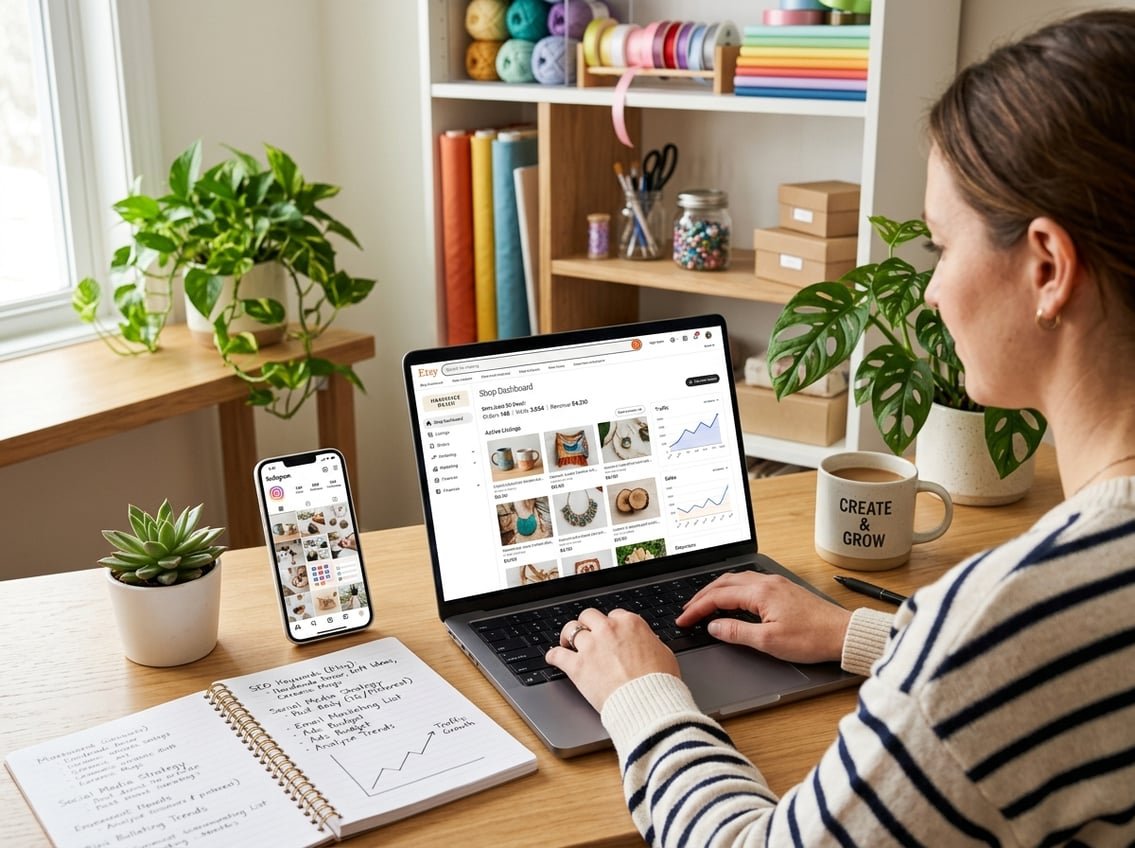
Use easy-to-execute tactics that fit into a daily routine: tweak listings for search, post purposeful content on Instagram, Pinterest, or TikTok, and run small paid tests to scale what works. Follow practical steps in this guide to turn casual clicks into repeat buyers and sustainable shop growth.
Key Takeaways
- Focus your listings so the right buyers find your Etsy shop.
- Drive targeted traffic from social and external channels.
- Convert visitors with clear listings and repeat-customer tactics.
Mastering Etsy SEO for Maximum Visibility

Focus on clear, searchable language and high-engagement listings. Prioritize titles that match buyer intent, use all tags and attributes, and target long-tail phrases that capture specific purchase moments.
Optimizing Listing Titles and Product Descriptions
Write titles that front-load the primary search phrase in the first 40 characters so mobile shoppers and Etsy search see the most important words first. Use natural, conversational phrases like “personalized leather keychain” rather than awkward keyword stuffing.
Keep titles readable for buyers while including modifiers (color, size, occasion) that buyers commonly add to queries.
In descriptions, open with a one-line product summary that repeats the main search phrase naturally. Follow with bullet points for dimensions, materials, processing time, and shipping to answer purchase questions fast.
Etsy’s algorithm reads descriptions for semantic context, so include related terms and use plain language buyers use in search. Avoid duplicating the exact keyword repeatedly; aim for helpful, scannable content that improves conversion and boosts your listing quality score.
Selecting Effective Etsy Tags and Attributes
Use all 13 Etsy tags and prioritize multi-word phrases that mirror real search behavior (e.g., “boho wall art print” not just “art”). Treat tags as distinct query matches—vary word order and include synonyms, regional terms, and common buyer intents like “gift for mom” or “wedding favor.”
Fill every relevant attribute and pick the deepest subcategory available. Attributes (color, material, occasion) act as extra filters and increase chances of appearing in sidebar-filtered searches.
Audit tags periodically using your Etsy search analytics. Remove low-performing tags and replace them with tested long-tails from recent buyer queries. Track which tags lead to impressions and conversions, then fold high-performing phrases into titles and descriptions for stronger query matching.
Leveraging Long-Tail Keywords for Better Targeting
Long-tail keywords capture specific buying intent and often face less competition in Etsy search. Target phrases with purchase cues like “custom bridal party tote bag” or “handmade cedar aromatherapy sachet” to reach shoppers closer to checkout.
Find these phrases by typing base terms into Etsy’s search bar and noting autocomplete suggestions, then expand with “for,” “with,” or occasion-based modifiers. Use tools like eRank or your shop analytics to validate search volume and conversion performance.
Implement long-tails across title, first sentence of the description, and one or two tags. Prioritize variants that improved click-through or conversion in your analytics. This focused approach aligns with Etsy’s search algorithm, raises listing relevance, and drives more organic traffic to product listings.
Creating Compelling Listings That Convert

Focus on making each listing instantly clear, trustworthy, and easy to buy. Use precise titles and descriptions, bold visuals (photos and video), and social proof so shoppers click and convert.
Crafting High-Converting Product Descriptions
Write a short, scannable opening that states exactly what the product is, its primary material, and one key benefit. Start with a clear product title that uses the most relevant keyword in the first 3–5 words so shoppers see it in search results.
Break details into bullet points: dimensions, weight, materials, care instructions, and processing time. Use one-line paragraphs to call out variations (size, colour, personalization) and ordering steps. Include exact measurements (cm/in), model measurements when relevant, and a sentence about fit or scale to reduce returns.
Integrate keywords naturally within the first two sentences and again in a final line about uses or occasions. Avoid repeating the title verbatim. Finish with a short note on shipping options or lead time to set expectations.
Enhancing Listings With Persuasive Images and Videos
Lead with a clean, high-resolution main photo that clearly shows the product against an uncluttered background. Use at least 6–8 images: scale shots with a ruler or hand, lifestyle shots showing the product in context, close-up detail photos of texture or stitching, and a photo showing included accessories or packaging.
Use consistent lighting and color balance across images so colors match buyer expectations. Add a short listing video (5–20 seconds) that rotates the product, demonstrates use, or shows movement for textiles and jewelry. Optimize image order so the first three are main, scale, and lifestyle—these drive click-through and conversion.
Label images in alt text and filenames with concise keywords (e.g., “linen-table-runner-scale-shot.jpg”) to support Etsy’s image crawl and clarity for shoppers.
Improving Conversion Rates With Social Proof and Reviews
Display recent, specific customer reviews near the top of the listing description or in the photo set where possible. Highlight short testimonials that mention fit, quality, and delivery speed. Use a bulleted “What customers say” section with 2–3 one-line quotes and star average if you have it.
Prompt buyers for photos and permission to reuse them as lifestyle shots; user-generated images increase trust. Respond publicly to reviews—thank positive reviewers and fix issues noted in negative ones—so prospects see active customer service. If you have repeat-buyer badges or press mentions, add them as small badges in an image or as a bold line in the description to boost credibility.
Leveraging External Traffic Channels
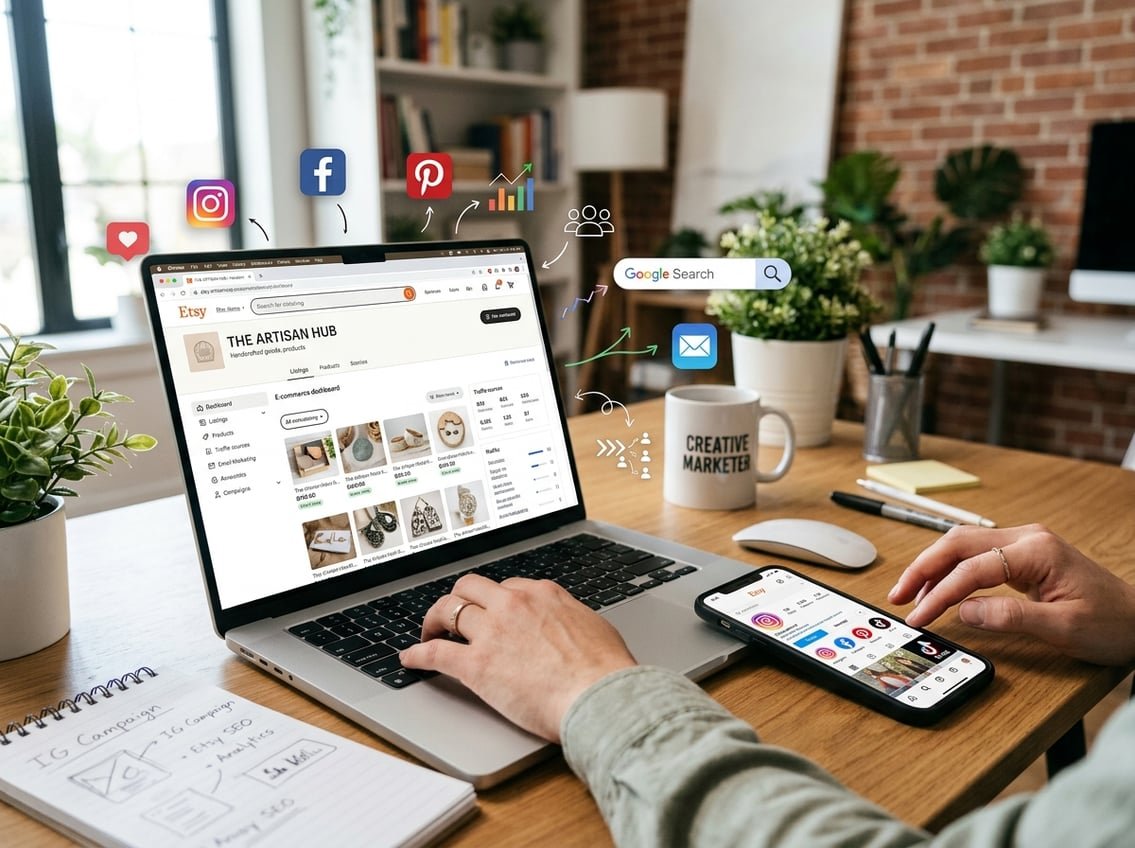
Focus on platforms where visual discovery drives clicks and where you can control links back to your Etsy listings. Prioritize consistent, product-led content that points directly to specific listings, collections, or your shop homepage.
Driving Pinterest Traffic With Rich Pins and Boards
Use Rich Pins to pull metadata from your listings so pins display accurate pricing and availability. Enable product Rich Pins via Pinterest’s validator and keep SKU/price tags in your Etsy listing metadata.
Organize boards by intent: “Gift Ideas — Under $50,” “Wedding Hair Accessories,” or seasonal collections. Pin directly from your Etsy listing URL to maintain link integrity. Write pin descriptions with 2–3 targeted keywords plus a call to action (e.g., “Shop the matching set on Etsy”).
Schedule pins with Tailwind or Pinterest’s scheduler to post 3–5 times per week and re-pin high-performing pins to related boards. Join 2–3 niche group boards to amplify reach but avoid mass reposting; focus on relevant communities.
Create one image optimized for Pinterest (1000 x 1500 px), plus a vertical variant and a simple lifestyle image. Use subtle text overlays for context and add your shop name in the corner to boost brand recognition.
Using Instagram Reels and Short-Form Video
Prioritize Reels that show product use, unboxing, or a 15–30 second making process. Start each video with a strong visual hook in the first 2–3 seconds to reduce swipe-away rates.
Add captions and product tags when available; include a direct link to the featured listing in your bio and change it for each campaign. Use 2–3 relevant hashtags plus one branded tag and a clear CTA in the caption (e.g., “Tap the link in bio to buy”).
Encourage UGC by running a simple weekly prompt or hashtag challenge and repost customer videos to your feed. Repurpose Reels as short TikToks and Pinterest Idea Pins to multiply exposure without extra production time.
Building a Blog and Creating Content for Brand Awareness
Start a blog on your own domain to control SEO and capture long-term organic traffic. Publish product-centered posts such as “How to care for handmade jewelry” or “Top 10 customized baby gifts,” each linking to 2–4 specific Etsy listings.
Use keywords informed by Google and Etsy search terms in titles, headings, and at least one internal link per post back to your shop. Add structured product data and high-quality images optimized for fast load times.
Promote posts through email and social channels; convert readers with inline CTAs and a simple content upgrade (PDF gift guide). Track referral traffic so you can prioritize topics that drive clicks and sales.
Social Media and Influencer Marketing Tactics

Use targeted tags, paid placements, and small-scale creator partnerships to send ready-to-buy shoppers to your listings. Focus on platform-specific formats (Reels, Stories, Pins) and on content that shows products in real life—styling, unboxing, and behind-the-scenes—to convert impressions into clicks.
Using Hashtags and Social Media Ads
Use a mix of broad and niche hashtags to reach both general shoppers and specific hobby or interest groups. On Instagram and TikTok, pair 5–10 niche tags (e.g., #handmadejewelry, #plantmoms) with 2–3 broader tags to balance reach and relevance. Track which tags drive profile visits and add or rotate them monthly.
Run small, measurable ad tests before scaling. Start with a $5–10/day campaign targeting lookalike or interest audiences and promote a single product page or landing page. Use short Reels or carousel ads with a clear CTA (shop link or collection). Monitor click-through rate and cost per click, then reallocate budget to creatives and audiences that outperform.
Use UTM parameters on ad links to tie social ad traffic back to Etsy analytics. Test one creative variable at a time—headline, thumbnail, or CTA—to learn what prompts clicks. Keep copy direct: price, free shipping, and limited quantity often increase conversions.
Collaborating With Micro-Influencers and Niche Communities
Target micro-influencers (1K–50K followers) whose followers match your buyer persona. Offer product trades, affiliate codes, or small paid fees instead of large sponsorships. Micro-influencers often deliver higher engagement and more authentic unboxing videos or styling demos.
Provide clear content requests: show the unboxing, try-on, and a short link or discount code in the caption. Ask for 1–2 feed posts plus 2–3 Stories or a Reel within a 7–10 day window to maximize visibility. Track conversions using unique coupon codes or UTM links to measure ROI.
Tap niche communities on Facebook Groups, Reddit, and Pinterest boards. Share value—behind-the-scenes posts about making a product or care tips—rather than hard sells. Community-driven recommendations and pinned discussion threads can produce steady referral traffic when you participate consistently.
Showcasing Products With Lifestyle and Styling Tips
Create lifestyle shots that show scale, context, and use-cases. Photograph items being worn, held, or staged in a room to answer the buyer’s “how will this fit my life?” question. Use 3–5 hero images and 2–3 short video clips for each new listing.
Produce quick styling tip clips (15–30s) and Reels that combine several looks or occasions. For apparel or accessories, show outfit pairings and transition cuts to keep viewers engaged. For home goods, show placement ideas and maintenance tips.
Include short captions with actionable info: dimensions, fabric, or suggested pairings. Use unboxing videos and behind-the-scenes content to build trust—show packaging quality and ship times. Pin high-performing lifestyle posts to your profile and reuse them in ads for consistent messaging.
Building Customer Loyalty and Repeat Buyers
Focus on turning one-time buyers into repeat customers through targeted email touchpoints and clear, value-driven offers that make returning simple and attractive.
Crafting Effective Email Campaigns and Newsletters
Use email marketing to capture buyer contact information and then nurture relationships. Start with a welcome email sent within 24 hours of signup or purchase that thanks the buyer, confirms what they ordered, and includes a small incentive (e.g., 10% discount code) to encourage a second purchase.
Segment your list by purchase behavior: one-time buyers, repeat buyers, and high-spenders. Send targeted campaigns—product restock alerts for previous buyers, curated collections for browsers, and VIP previews for top customers. Keep newsletters concise: 2–3 product highlights, one short story or behind-the-scenes item, and a single call-to-action linking to a landing page or collection.
Automate follow-ups: a post-purchase email asking for feedback or a review, and a 30–60 day reminder with complementary product suggestions. Use clear subject lines (e.g., “Your reorder made easy + 15% off”) and track open, click, and conversion rates to refine messaging.
Offering Exclusive Discounts, Bundle Deals, and Free Shipping
Design offers that reward return behavior without eroding margins. Use exclusive discounts and coupon codes targeted to specific segments—new subscribers, customers who viewed but didn’t buy, and loyal repeat buyers. Limit codes by time or usage to create urgency and measure lift.
Promote bundle deals that increase average order value. Offer logical pairings (e.g., mug + coaster) with a small percent off the bundle compared to buying items separately. Show savings clearly on product pages and in email campaigns.
Offer free shipping as a threshold incentive (e.g., free shipping over $50) rather than sitewide. Highlight the threshold in cart notifications and emails to nudge customers toward adding one more item. Test combinations—free shipping + small discount for first repeat order—to find the highest repeat purchase rate while preserving profit.
Maximizing Paid Advertising and Etsy-Specific Tools
You’ll use Etsy Ads, offsite promotion, and keyword tools to increase visibility, control spend, and measure return. Focus budgets on high-converting listings, monitor ROAS, and use keyword data to refine targeting and bids.
Getting Started With Etsy Ads and Promoted Listings
Begin by auditing your listings: prioritize items with strong photos, clear titles, and conversion history. Use Etsy Ads to promote specific listings; set a modest daily budget and raise it only after you see click-throughs and sales.
Choose promoted listings where relevance and conversion rates are high — these give the best immediate visibility inside Etsy search. Optimize bids by increasing spend on listings with low cost-per-sale and positive ROAS.
Use the Etsy Ads dashboard daily at first to spot trends: impressions, CTR, CPC, and sales per listing. Pause ads on listings with high CPC and no sales. Reinvest budget into listings that show consistent conversion.
Boosting Results With Offsite Ads and Shopping Ads
Etsy offsite ads automatically place your listings on external networks (social and search). You pay a percentage fee only when a sale originates from those ads, so track which products generate profitable offsite traffic.
Pair offsite ads with manual Google Shopping or social ad campaigns when you want more control. Create shopping campaigns that use optimized product titles and structured data to match high-intent queries.
For paid advertising outside Etsy, test small audiences and use UTM tags to attribute traffic back to specific campaigns. Monitor ROAS closely; scale campaigns that deliver cost-per-acquisition below your acceptable threshold.
Tracking Performance With Keyword Tools and Analytics
Use keyword tools (Google Keyword Planner, eRank, Marmalead) to find high-intent search phrases and seasonal demand. Export keyword lists and prioritize phrases with buyer intent (e.g., “custom leather wallet gift”) for titles and tags.
Combine keyword insights with Etsy Stats and ad dashboards to measure impressions, click-through rate, and conversion by keyword. Track ROAS per keyword and per campaign to decide which terms get higher bids.
Regularly A/B test titles, tags, and promoted images. Keep a simple spreadsheet tracking spend, revenue, and ROAS for each listing and channel. Adjust budgets weekly based on that performance data.
Frequently Asked Questions
These answers focus on practical, high-ROI actions: improving listings for search, using specific social platforms that drive buyers, recovering from traffic drops, and tactics tailored to digital products and off-platform traffic.
What are the most effective ways to increase visits to an Etsy shop without paying for ads?
Optimize your listings with focused keywords in titles, first 160 characters of descriptions, and all relevant tags. Use clear, high-resolution photos that show multiple angles and contextual styling to increase clicks from search and social shares.
Post consistently to Pinterest, Instagram, and TikTok with content that links back to individual listings or collection pages. Repurpose one product video into multiple formats (short Reel, Pinterest Idea Pin, TikTok clip) to extend reach with minimal extra work.
Collect emails with a simple discount or freebie and send targeted updates for new releases or restocks. Email drives repeat visits and converts faster than cold social traffic.
How can I improve Etsy SEO to get more organic traffic from search results?
Research long-tail keywords buyers use (e.g., “minimalist hammered gold hoop 14k”) and put the most important phrase at the start of the title. Match keywords across title, primary tag, and the first lines of your description to reinforce relevance.
Fill out all attributes and categories accurately; Etsy uses them in filters so missing attributes can block you from appearing in filtered searches. Keep titles readable for humans—avoid keyword stuffing that reduces click-through rate.
Regularly review search analytics and adjust underperforming listings: tweak photos, try alternate keywords, and A/B test listing sections like thumbnail images or price points.
Which social media channels tend to send the most qualified buyers to Etsy listings?
Pinterest often sends high-intent buyers because users search visually with purchase intent; well-keyworded pins can drive steady traffic for months. Prioritize Product Pins and Idea Pins and include direct links to your listings.
Instagram Reels and shopping-enabled posts reach a broad audience and convert well when you show the product in use or packaged for shipping. Use product stickers and link to your shop from your bio or Link-in-Bio tool.
TikTok drives discovery for process, packaging, and transformation videos; buyers who watch packaging or behind-the-scenes content often convert at higher rates. Tailor content to trends but always include a direct path back to the listing.
What should I do when my Etsy shop traffic suddenly drops week over week?
Check Etsy Stats first for changes in traffic sources—organic search, social, or direct. That helps pinpoint whether the drop is platform-wide, seasonal, or linked to a single channel.
Audit recent listing changes, price updates, or new competitor activity. Revert experimental changes and refresh top-performing listings’ photos and tags to restore visibility.
Look for external causes: algorithm updates, holiday seasonality, or social platform reach changes. If email and repeat-customer traffic fell, examine your announcements and campaign timing.
How can I drive more direct traffic to my Etsy shop from outside the marketplace?
Create keyword-optimized pins and schedule them weekly to relevant Pinterest boards; pin each listing multiple times across seasonal and niche boards. Use descriptive pin text that mirrors likely search phrases.
Build a simple landing page or blog post targeting high-intent queries (e.g., “handmade wedding favors small orders”) and link directly to your Etsy listings. Promote that page on Instagram, TikTok, and in relevant Facebook groups to funnel qualified buyers.
Encourage backlinks by offering free press kits or wholesale info to bloggers and niche editors. Each quality backlink increases referral traffic and can boost SEO for off-platform content.
What tactics help increase sales for digital products on Etsy specifically?
Write precise keyworded product titles and descriptions that include file formats, intended uses, and compatible software (e.g., “Printable wedding invitation template — A4, PSD & Canva”). Buyers need clarity before purchase for instant-download items.
Provide multiple preview images showing the finished product in use and a close-up of included files or layers. Offer one low-cost sample or a timed discount to reduce friction for first-time buyers.
Automate delivery and include a short PDF with usage tips and troubleshooting to lower refund rates. Promote your digital products on Pinterest and niche communities where creators seek templates and assets.